The visit of prof. Anna Ferragina from the University of Salerno at the Faculty of Economics
Between 7 and 10 April 2026, the Faculty of Economics hosted Anna Ferragina from the University of Salerno, who carried out a teaching mobility at our university within the Erasmus+ program.
It was a period of intensive academic cooperation, exchange of experiences, and inspiring meetings with students and faculty members.
Professor Anna Ferragina conducts research in international economics and corporate finance, focusing in particular on the impact of foreign direct investment, innovation, and financial constraints on firm development and productivity. In her work, she also analyses the relationships between international trade, migration, and knowledge diffusion, using advanced econometric methods and spatial analysis. Additionally, she is involved in projects related to sustainable development, linking economic policy issues with the challenges of contemporary financial systems.
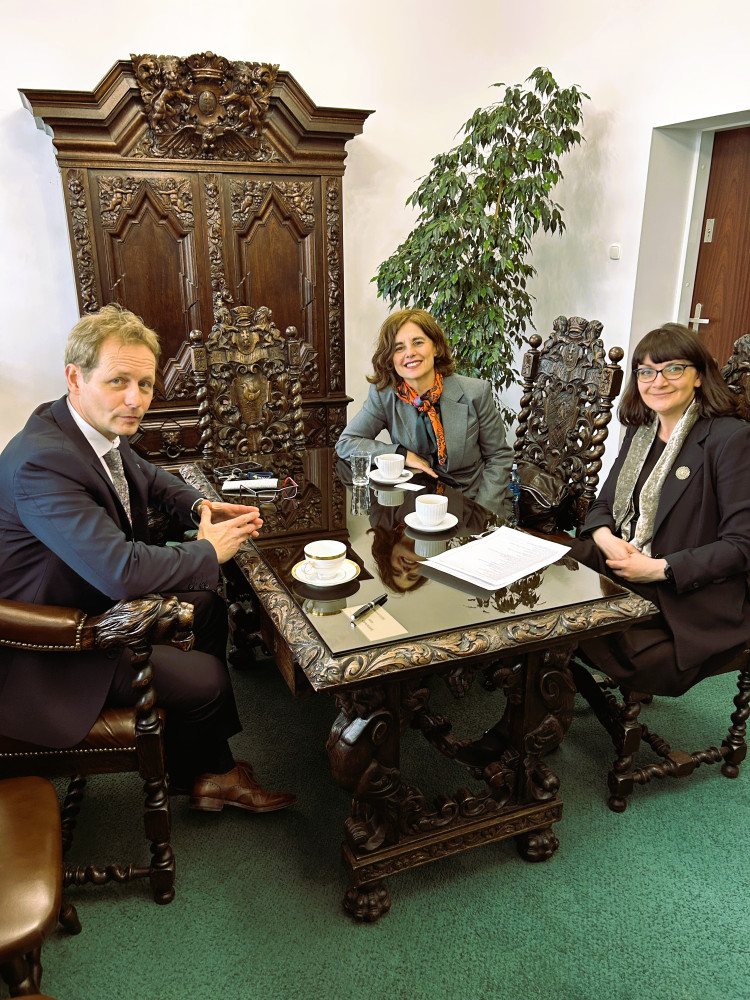
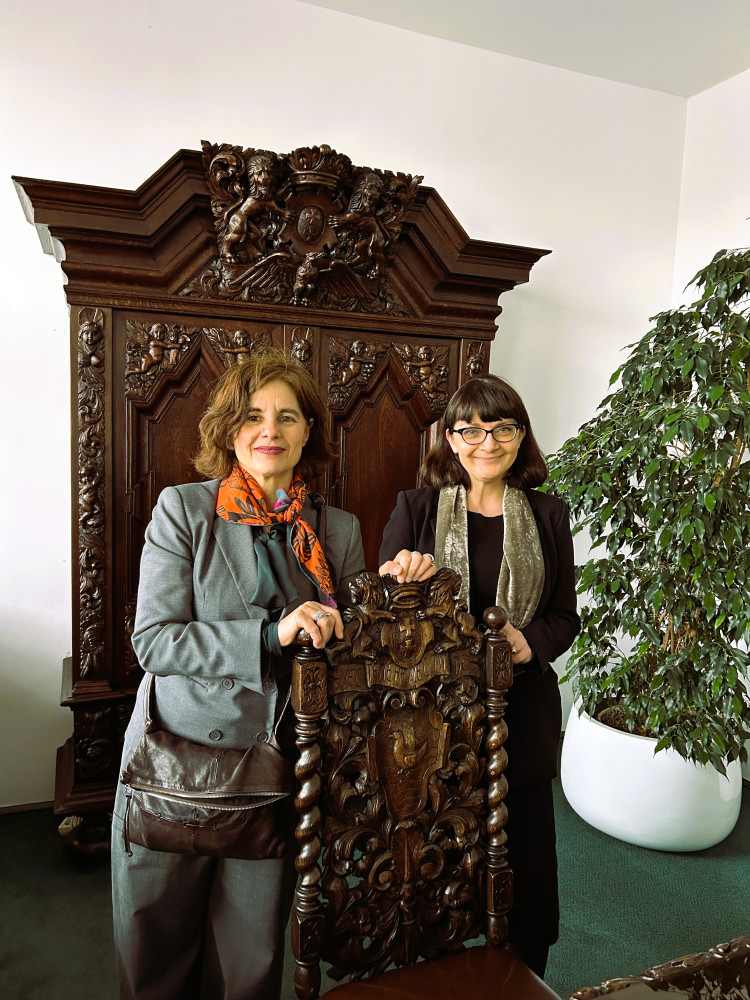
An important element of the visit was a discussion on the further development of cooperation between the universities. A meeting with the Dean of the Faculty of Economics, prof. Wojciech Bizon, provided an opportunity to discuss directions for developing academic exchange and to explore ways to further strengthen and structure it. The Professor also met with prof. Joanna Bednarz, Head of the Department of International Business, and dr Urszula Mrzygłód, coordinator of the International Business program.
The meeting with students eligible to study in Salerno under the Erasmus+ mobility program for the next academic year was followed by valuable advice on study planning.
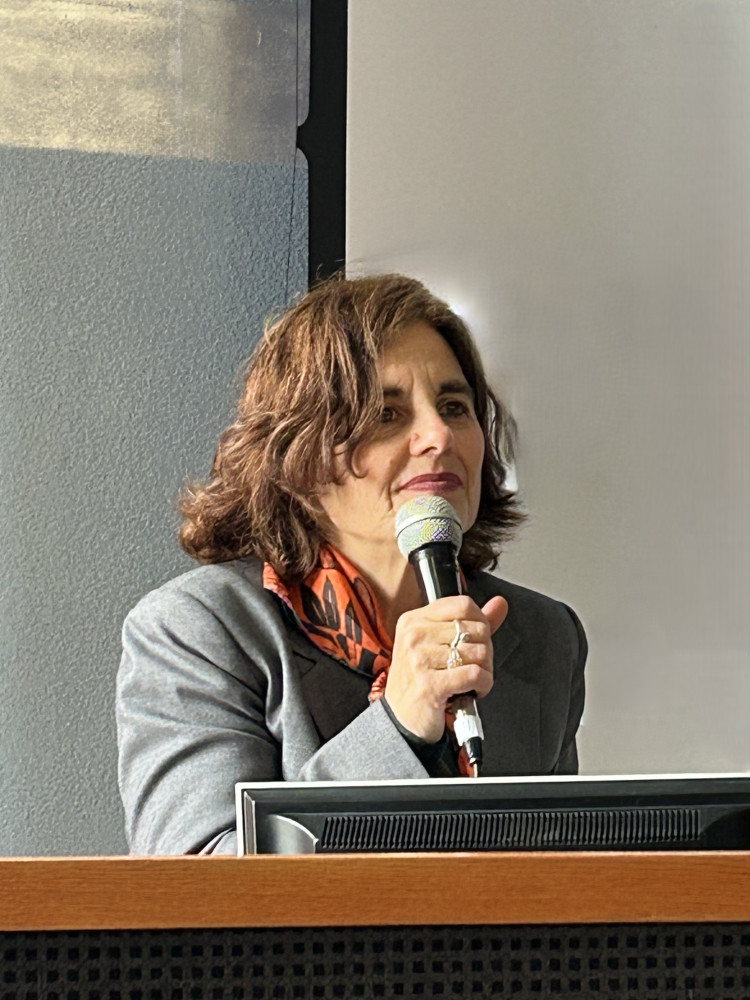
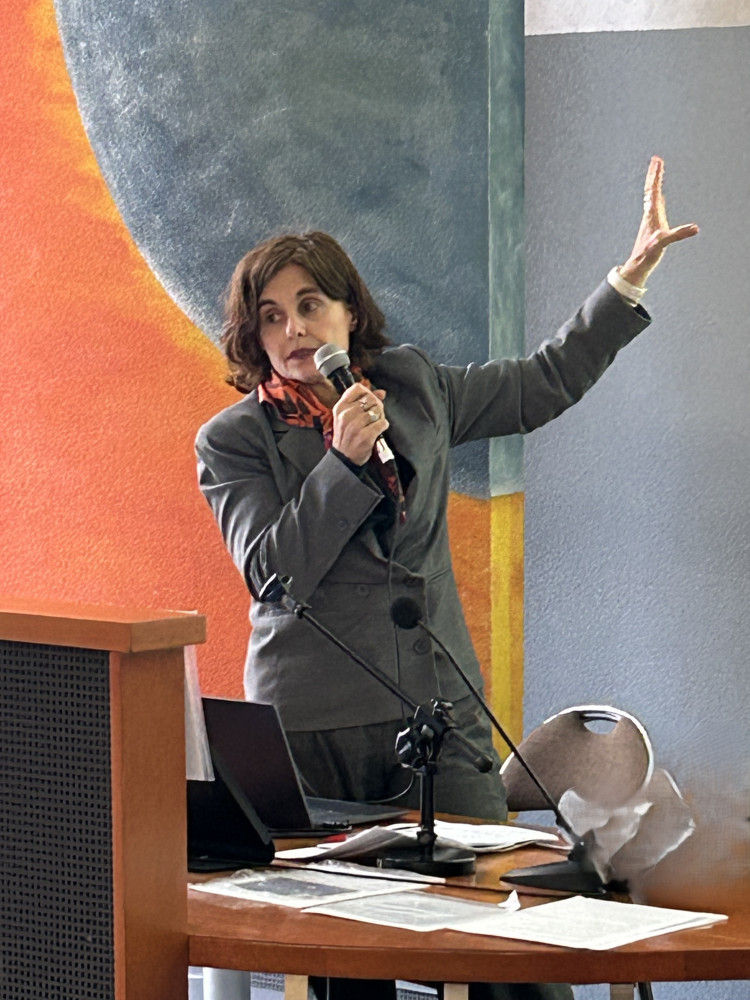
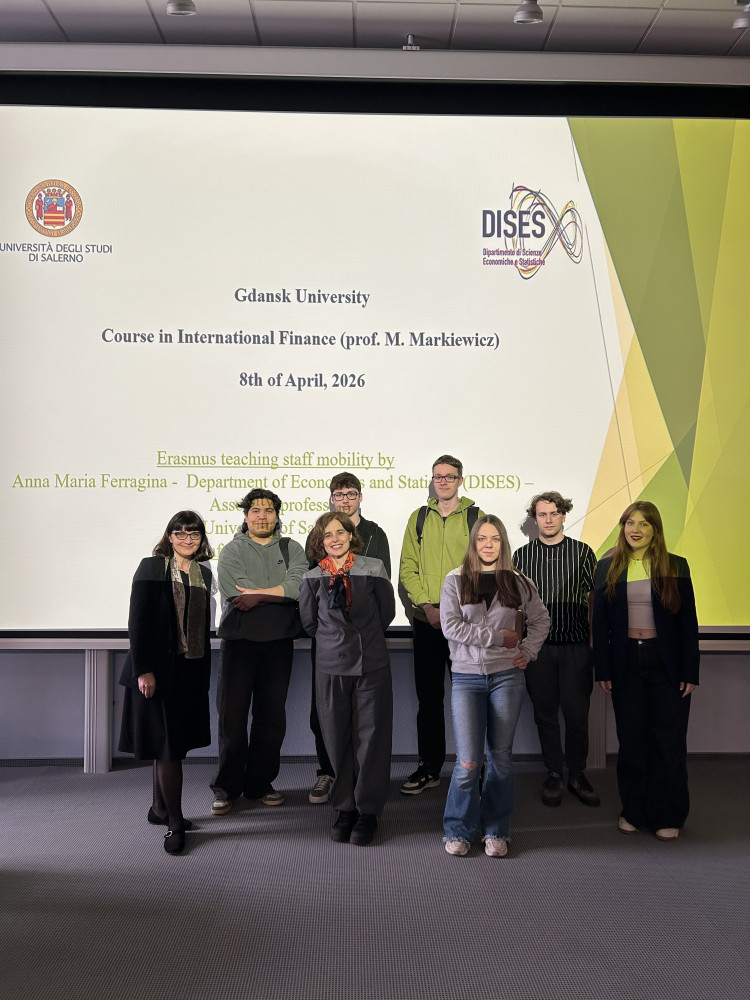
The unique opportunity for students in the fields of International Business and International Economic Relations was to participate in lectures on “Economics of Sanctions”. Professor Ferragina addressed key issues related to the functioning of economic sanctions in the contemporary global economy. In particular, she discussed the mechanisms of sanctions, their impact on international trade and capital flows, and the role of sanctions in shaping economic risk and business decision-making. The lecture combined theoretical approaches with real-world examples, enabling students to better understand the complexity of the discussed processes.
The professor emphasized that students demonstrated high levels of engagement, excellent preparation, and openness to discussing complex and current economic issues. She was particularly impressed by the approach to education at the Faculty of Economics and the University of Gdansk, which combines high academic standards with a friendly and supportive atmosphere.
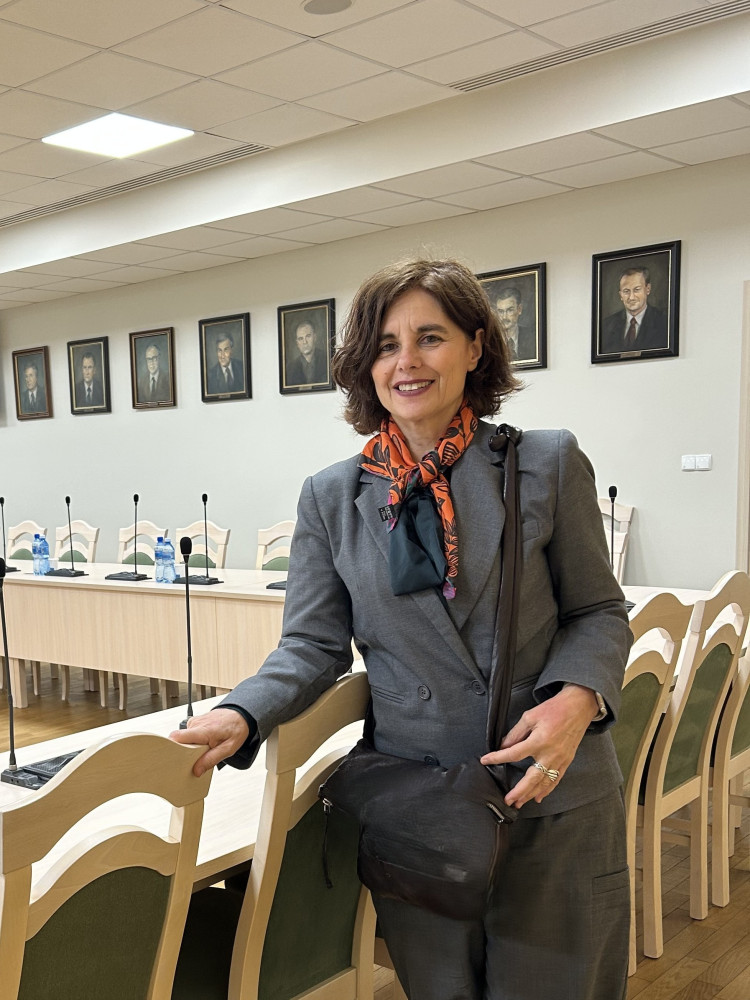
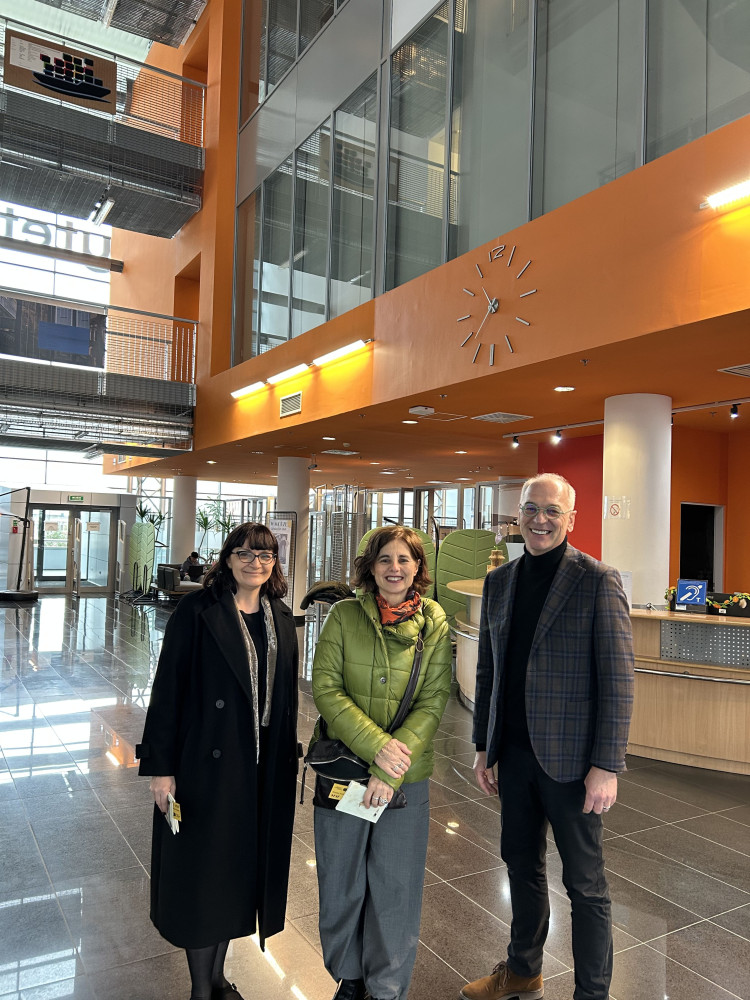
During her stay, Professor Ferragina visited both the Oliwa campus and the Faculty of Economics in Sopot, appreciating their unique location and modern infrastructure. The University of Gdańsk Library, designed in the spirit of Scandinavian comfort and well-being, made a particularly strong impression. She also had the opportunity to discuss it with the Director of the Library, prof. Arnold Kłonczyński.
Professor Anna Ferragina’s visit took place at the invitation and under the supervision of dr Magdalena Markiewicz, Deputy Dean for Development and Cooperation with the Socio-Economic Environment of the Faculty of Economics.
Professor Ferragina’s visit constitutes an important step in further strengthening the University of Gdańsk's international cooperation. As she emphasized, the university is an excellent destination for Erasmus+ mobility, which she will strongly recommend to students of the University of Salerno.
In her reflections, the Professor highlighted the strong engagement of University of Gdańsk staff in international business and finance, with particular emphasis on sustainability. As she noted, preparing students for future professional challenges cannot take place without simultaneous attention to environmental and social responsibility.
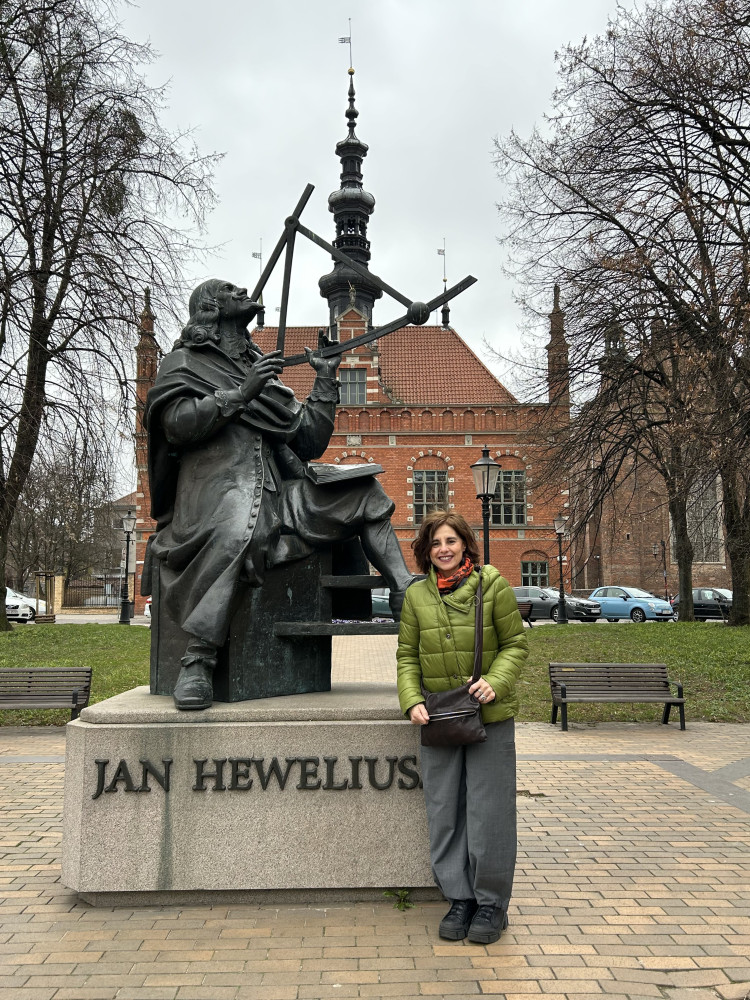
An equally important aspect of the experience was the unique identity of the Tricity -Gdańsk, Sopot, and Gdynia, which Professor Ferragina described as a fascinating combination of history, resilience, and diverse cultural influences.